
Early October — Ice Dams Are Forming Before You Know It
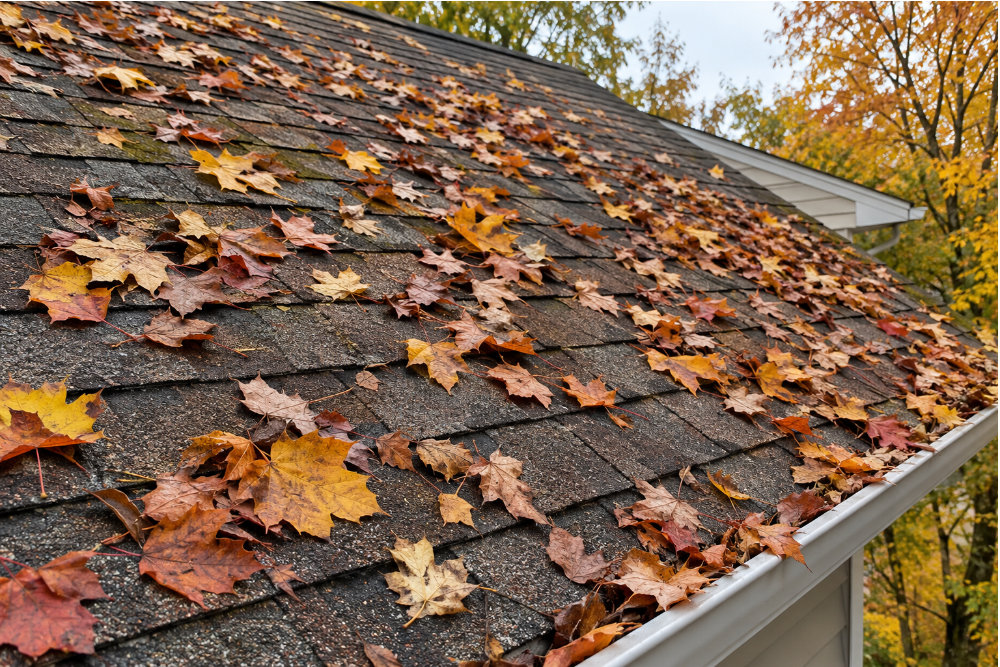
Early October in South Jersey still feels like fall rather than winter — the trees are turning, the days are comfortable, and the first frost is still weeks away. Most homeowners aren’t thinking about ice dams yet. That’s understandable. It’s also, unfortunately, exactly when ice dam prevention needs to happen — before the conditions that create them are already in place.
By the time ice dams form on your roofline in January, the preparation window has been closed for three months. Here is what ice dams actually are, why South Jersey homes are more vulnerable than most homeowners realize, and what early October is the right moment to do about it.
What ice dams are and how they form
An ice dam is a ridge of ice that forms at the edge of a roof — typically along the eaves — that prevents meltwater from draining off the roof surface. The mechanism is straightforward: heat escaping from the living space below warms the upper portion of the roof, melting snow or frost that then flows downward. At the colder eaves, where there is less heat loss from the structure below, that meltwater refreezes. The resulting ice mass backs water up under the shingles, where it infiltrates the roof deck, the underlayment, and ultimately the structure and interior of the house.
South Jersey’s winter pattern is particularly conducive to ice dam formation. The region doesn’t experience the sustained deep freeze of New England — temperatures regularly cycle above and below freezing throughout November, December, and January. That repeated thaw-and-refreeze cycle is exactly the mechanism that builds ice dams progressively, even without significant snow accumulation.
The attic ventilation connection
The root cause of ice dam formation is almost always inadequate attic ventilation. When a home’s attic doesn’t have sufficient airflow — enough intake at the soffits and exhaust at the ridge to keep the attic temperature close to the outdoor ambient — heat from the living space accumulates and warms the roof deck unevenly. The result is precisely the temperature differential between the upper and lower roof that produces ice dams.
A properly ventilated attic stays cold throughout the winter. A cold attic means a uniformly cold roof deck. A uniformly cold roof deck doesn’t create the meltwater that builds ice dams, regardless of how many freeze-thaw cycles the season delivers. This is why two identical houses on the same South Jersey street can have dramatically different ice dam histories — the difference is almost always attic ventilation, not luck.
What early October allows you to do
The attic ventilation assessment that prevents ice dams needs to happen before winter — and October is the last comfortable, accessible window to do it. Once temperatures drop consistently below freezing, attic work becomes cold, difficult, and in some cases impractical. The findings that a November attic inspection reveals are the same ones an October inspection finds — but October leaves time to address them before the season creates the conditions that test the system.
-
Check soffit vents for obstruction — the intake side of the ventilation system is the most commonly compromised. Insulation pushed against the vents from inside, paint applied over screens from outside, or debris accumulation all restrict the airflow that keeps the attic cold in winter. -
Verify ridge vent is intact and unblocked — the exhaust side of the system needs a clear, continuous path at the ridge. A damaged or blocked ridge vent traps warm air in the attic regardless of how much intake exists below. -
Inspect attic insulation depth and coverage — inadequate insulation is the other major driver of roof-deck heat loss. If your attic floor insulation is compressed, incomplete, or missing in sections, the heat that should stay in your living space is warming your roof deck instead. -
Look for prior ice dam evidence — staining on the attic rafters or sheathing near the eaves, or water marks on the interior ceiling near exterior walls, are evidence of prior ice dam infiltration. Finding this in October gives you time to address the ventilation deficiency before the season repeats it. -
Ask about ice-and-water shield coverage — if your roof is being replaced this fall, confirm that ice-and-water shield is being applied at the eaves and in the valleys. This self-adhering membrane is the last line of defense if an ice dam does form — and Diamond Roofing installs it as a standard element of every replacement.
If you’ve had ice dams before
Homeowners who have experienced ice dams in prior winters have a specific and urgent reason to act in early October. A prior ice dam event means your ventilation system has already demonstrated that it doesn’t keep the attic cold enough to prevent the melt-refreeze cycle. Without intervention, it will do the same thing this winter. The damage from a second or third ice dam season is cumulative — and the structural and remediation costs of repeated infiltration events add up quickly against the relatively modest cost of a ventilation upgrade that solves the problem.
Diamond Roofing’s free inspection includes attic ventilation assessment as a standard component — soffit intake, ridge exhaust, insulation coverage, and ice dam risk evaluation. No separate appointment needed.
Ventilation upgrades — ridge vent systems and solar-powered attic fans — are available as standalone services on existing roofs. Most are completed in a single visit, and early October is the last comfortable window to have them done before winter.
The icicles that appear on your roofline in January aren’t decorative. They’re a symptom of a ventilation problem that October could have addressed. This is the window — and Diamond Roofing is a 24-hour call away from helping you use it well.
Free ventilation assessment · Ridge vent installation · 24-hour response · (609) 268-9200