
Why Fall Is the Best Time to Inspect Your Roof in South Jersey
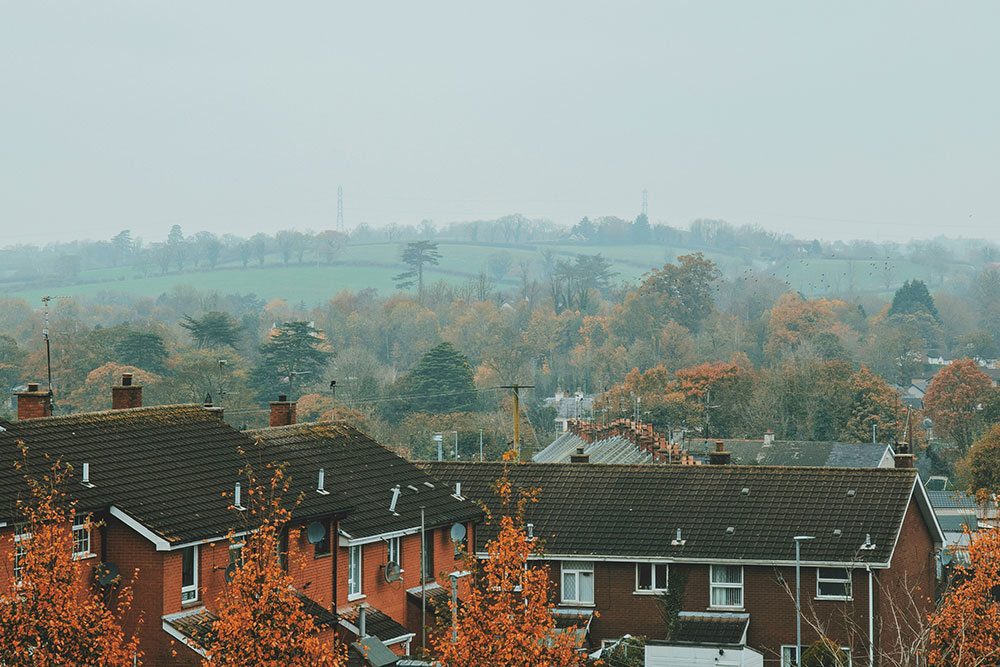
Spring gets most of the credit for roof inspections — and spring inspection has its place. But if you want the single most useful, most actionable roof assessment of the year in South Jersey, the window to do it is September and October. The combination of conditions that makes fall inspection uniquely valuable doesn’t exist in any other season, and homeowners who understand why consistently make better decisions about their roofs and their budgets than those who don’t.
Here is the case for fall inspection — and why it tells you things spring and summer can’t.
Fall reveals what summer did
By the time September arrives, your roof has absorbed the full impact of a South Jersey summer — months of peak UV exposure, repeated thermal cycling through heat waves, hail and wind from summer storm events, and sustained humidity that accelerates algae and moss growth. The damage accumulated through those conditions is fully developed and clearly visible in fall in ways it simply isn’t in spring, when the season is just beginning and accumulation hasn’t yet manifested.
A spring inspection tells you what winter did to your roof. A fall inspection tells you what an entire year did — winter’s freeze-thaw damage plus summer’s heat and storm stress, all visible in the same assessment. That’s a fundamentally more complete picture, and it’s why fall inspection produces more accurate remaining-lifespan estimates than any other time of year.
Fall light is the best roofing light of the year
This is a practical point that makes a real difference. The low angle of September and October sun — particularly in the late afternoon — creates a raking light across the roof surface that reveals irregularities invisible in the flat overhead illumination of summer midday. Blistered sections, lifted tabs, uneven shingle courses, and early deck deformation all cast shadows in fall’s angled light that they simply don’t produce in July.
A professional inspector working in September afternoon light sees a more detailed picture of shingle surface condition than the same inspector sees in June. This isn’t a small margin — experienced roofing contractors will tell you that fall ground-level assessments regularly reveal concerns that summer inspections of the same roof missed entirely.
Fall gives you time to act while options are still open
A September inspection that reveals a replacement is warranted gives you a meaningful window to act — while installation conditions are still good, while contractor schedules still have availability, and while the work can be completed before winter closes the practical installation window. The same inspection in November may reveal the same findings but leaves you with December installation as the best-case scenario — far from ideal.
September and early October represent the last period where the full range of options is genuinely available. A repair identified in September can be completed in days. A replacement identified in September can be scheduled and done before October is over. Both outcomes become progressively harder to achieve as the fall progresses and contractor availability compresses under peak-season demand.
What fall inspection covers that other seasons miss
-
1
Full summer damage assessment — heat blistering, UV-driven granule loss, hail impact evidence, and wind-lifted tabs are all fully developed and clearly visible after a complete South Jersey summer. -
2
Flashing condition before nor’easter season — thermal cycling has had a full season to work on flashing sealant and connections. Fall inspection catches separations before sustained nor’easter rain exploits them. -
3
Algae and moss establishment — summer humidity has given algae and moss their best growing conditions. Fall inspection identifies what’s established so it can be treated before winter’s freeze-thaw cycles embed growth more deeply into the shingle surface. -
4
Attic moisture evidence from summer — any moisture that entered the attic through a compromised section during summer storms shows as staining on rafters or decking — evidence that’s clearly visible in fall before cooler temperatures reduce the visual progression. -
5
Winter readiness assessment — a fall inspection specifically evaluates how the roof will perform through freeze-thaw cycles, ice dam risk, and the sustained load of snow events. A spring inspection can’t provide this — the winter that just passed is the only reference it has.
The lifespan estimate that actually means something
One of the most valuable outputs of a professional roof inspection is an honest remaining lifespan estimate — a realistic answer to the question of how many more years this roof has before replacement becomes necessary. Fall inspections produce the most accurate estimates of the year, for a simple reason: the inspector is seeing the roof after its two most demanding seasons have done their work, not before.
A spring inspection on a 14-year-old roof that says “three to five more years” is estimating based on winter damage and projecting through an unknown summer. A fall inspection on the same roof says “two to four more years” based on everything the roof has actually been through — winter, spring, and a full South Jersey summer. The fall estimate is grounded in complete evidence. The spring estimate is partially a projection.
For homeowners making financial decisions about whether to replace this fall, plan for next summer, or hold another full year, the difference between those two estimates is significant. Fall inspection gives you the number you can actually plan around.
Diamond Roofing’s free fall inspection includes a written summary, honest remaining lifespan estimate, and clear recommendation on next steps — with no obligation and no pressure.
We are scheduling fall inspections and installations now. Early fall slots fill fastest — call this week for the best available position before peak-season demand peaks in mid-October.
Spring will come again and offer another inspection opportunity. But the most complete picture of what your roof has been through — and what it has left — is available right now, in the light of a South Jersey fall. That picture is worth having before winter decides how the year ends.
Free inspection · Written lifespan estimate · No obligation · (609) 268-9200