
Picking the right roof color matters more than you realize
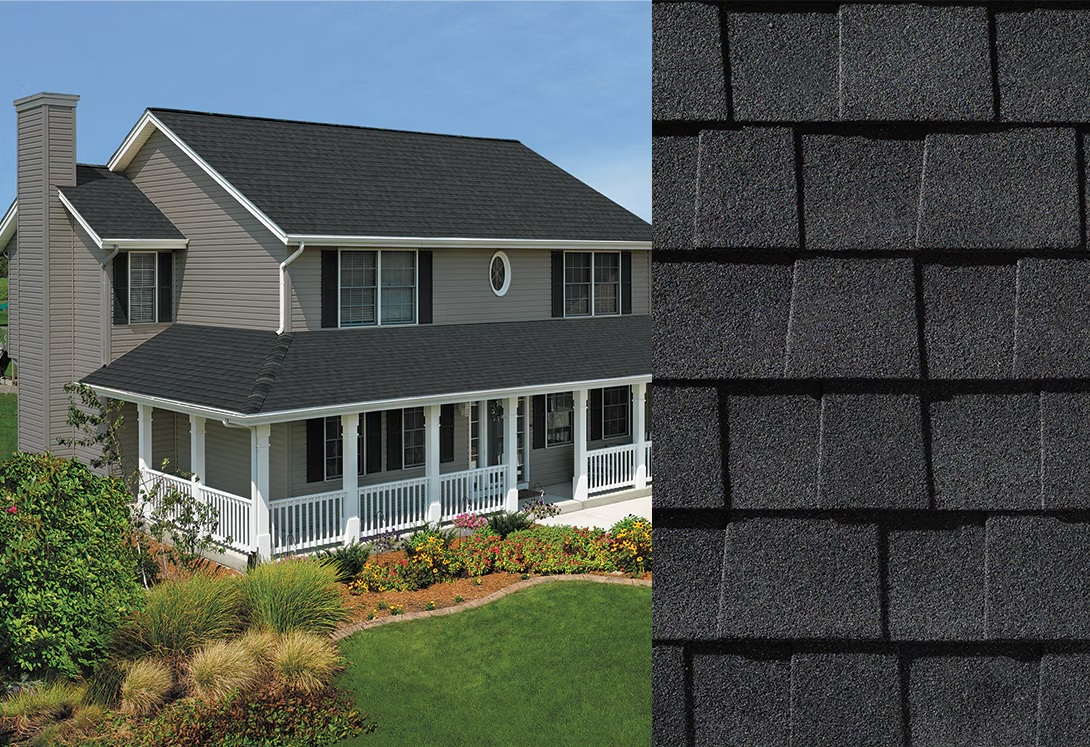 When it comes time to replace a roof, most homeowners spend weeks comparing contractor quotes and shingle grades — then pick a color in about five minutes. It’s one of the most common mistakes we see. Your roof covers roughly 40% of your home’s visible exterior. The color you choose will define your home’s look for the next 25–30 years, influence its energy efficiency, and directly affect resale value.
Getting it right isn’t complicated — but it does require thinking beyond “I’ll just go with whatever was up there before.”
Match your siding — but don’t try to match it exactly
One of the most common mistakes is choosing a shingle color that’s too similar in tone to the siding. When the roof and siding blend together, the house loses definition and looks flat. The goal is to complement, not copy. A warm beige home with a warm brown-gray shingle looks intentional. The same home with a near-identical tan shingle just disappears.
A simple rule: if your siding is warm-toned (yellows, tans, browns, reds), choose a warm-toned shingle. If your siding is cool-toned (grays, blues, whites), a cool charcoal or slate gray will anchor it well.
Color affects energy efficiency, too
This surprises a lot of homeowners. Darker shingles absorb more solar heat, which raises attic temperatures and can push up cooling costs through South Jersey’s humid summers. Lighter shingles reflect more energy. If efficiency matters to you, both GAF and Owens Corning offer cool-roof shingle lines that use specially coated granules to reflect heat regardless of color — worth bringing up when you’re reviewing options.
Think about resale value
Real estate professionals consistently rank roof color as a top curb appeal factor. Neutral, timeless shades — charcoal, slate, weathered wood — appeal to the broadest range of buyers. Going bold or trendy risks dating the home or narrowing your buyer pool. If you’re within five to seven years of selling, play it safe with a classic neutral.